

22/07/2026
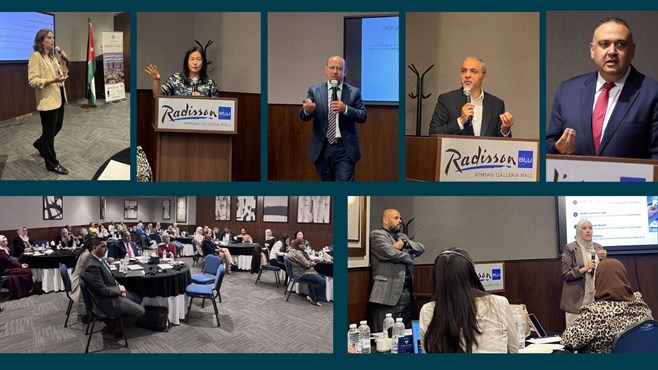
The Public Investment Management (PIM) Unit at the Ministry of Planning and International Cooperation (MoPIC), in collaboration with the World Bank, organized a training workshop on Wednesday, 22 July 2026, for representatives from government ministries and institutions on Public Investment Management (PIM), the preparation of capital investment projects, and Public-Private Partnership (PPP) projects. The workshop brought together representatives from 28 government entities.
The workshop was organized as part of the Ministry's ongoing efforts to strengthen public investment management and enhance the capacity of government entities in preparing and evaluating investment projects. These efforts support public financial management reforms, improve the quality and readiness of government investment projects, and contribute to the preparation of the 2027 General Budget Law.
The workshop aimed to strengthen participants' technical capacity in preparing investment projects by covering financial, technical, and developmental aspects of project preparation. It also sought to enhance the efficiency of public expenditure, improve the quality of project-related information and data, and ensure project readiness in line with the requirements of the National Registry of Government Investment Projects (NRIP) Regulation No. (8) of 2024, which governs the appraisal and registration of capital investment and Public-Private Partnership projects through the National Registry of Government Investment Projects (NRIP) electronic platform. In addition, the workshop highlighted the Ministry's role in approving new investment projects under the Planning and International Cooperation Law No. (10) of 2024, while ensuring alignment with the Economic Modernisation Vision (EMV), its Executive Programmes, and relevant sectoral strategies.
Ahmed Hawyan, Assistant Secretary General at MoPIC and Director of the PIM Unit, emphasized that strengthening government capacity in public investment management is fundamental to improving the quality and readiness of investment projects. He noted that adopting international good practices and integrating financial, technical, environmental, and social considerations throughout project preparation contributes to more efficient public spending and maximizes the development impact of public investments, in line with the Government's priorities and the Economic Modernisation Vision.
The workshop covered the fundamental principles and objectives of Public Investment Management, the public budget preparation process, and international best practices for investment project preparation and appraisal. Discussions also addressed the integration of capital and operational expenditures (CAPEX/OPEX), Public-Private Partnership (PPP) projects, and the importance of incorporating environmental, climate, social, and gender considerations throughout the project cycle to enhance project sustainability, improve development outcomes, and maximize the impact of public investments.
As part of the workshop, Eng. Sireen Al-Adwan, Sectoral Reform and Climate Change Lead at the Reform Secretariat, delivered a presentation on integrating national environmental and climate considerations into government investment projects. The session highlighted the importance of integrating these considerations from the early stages of project planning, preparation, and implementation to strengthen the sustainability of public investments and ensure their alignment with national priorities and international good practices.
The workshop concluded with an interactive discussion during which participants raised questions and shared observations on the workshop topics, further strengthening their technical knowledge and practical understanding of Public Investment Management and investment project preparation.
Follow Us


